Pages

Rebecca McCormick. Powered by Blogger.
Showing posts with label holocaust. Show all posts

Night by Elie Wiesel - Review

Saturday, May 25, 2024


I can't really believe that I've never read Night by Elie Wiesel before. I have probably said it before that I did Theology and Religious Studies at university and as part of that I studied a lot of world religions and Judaism was one of them. I read some Holocaust literature then and I've read a lot since. You can find other reviews that I've posted here on the subject under the tag 'Holocaust'. But for some reason I had never picked this up. I think I have an anthology of writings about the Holocaust which is huge and which I've never read, and I am pretty sure at least part of Night is in that. But I hadn't ever read this and I'm ashamed for that because it has got to be one of the most well known pieces of Holocaust writing, by a survivor. I am so glad I finally got to it. I'm not sure where I picked this up but I think it was in a charity shop recently - probably Skipton at the beginning of April. 

It's a small volume but gosh, the things that are contained within. I knew that Elie was a holocaust survivor, of course, but I didn't know that his family had almost escaped it. They weren't deported from their native Hungary until 1944. As a reader so many years later that just seems so drastically unfair - the war was almost over! Auschwitz was liberated at the end of January in 1945, just a few months later! But of course at the time Elie's family would have no way to have known that. 

Elie was the only son in a family with four children - two older daughters and his younger sister Tzipora, plus his mother and father. They weren't deported until after the Nazis invaded Hungary. First of all they were moved to a ghetto (please be aware that the word 'ghetto' refers originally to where Jews were forced to live in Venice in the 16th century) and Elie describes the first night there, a night which for him was to last years and years as he was first imprisoned in Auschwitz and Birkenau, and then Buchenwald when the Russians got too close to Auschwitz, and then post war. 

He details arriving at Birkenau. His mother and Tzipora were immediately sent to the death chambers; Elie never saw them again. His older sisters were sent to the women's section and they both survived the war, but it was obviously years before Elie saw them again. He mostly concerned himself with keeping his father, Shlomo, alive. The veteran inmates of the camp tell Elie and his father how lucky they are and also how to stay alive. 

Obviously, the details of the camp are horrific to read about. For that, I am not giving this book a rating and am just telling you to go and read it. It's a classic for a reason and something that everyone really should read in their lives, I think. I found it really interesting to read about inmates being moved from Auschwitz to Buchenwald (within Germany's borders) - it was a death march very close to the end of the war in Europe and many prisoners died on the way. This is a part of the holocaust and war in general that fascinates me - how does life go back to 'normal' afterwards? How do people move on? Many Jews spent time in Displaced Persons Camps when the war ended. 

I'm glad I read this. It is obviously brutal. Wiesel is a master with his words; I particularly liked the way he used 'we' to refer to what happened to people as a whole. He does this often and it really gets across the suffering that a mass of people went through. Read this now. 

The Nightingale by Kristin Hannah - Review

Saturday, February 4, 2023

I bought this book ages ago and then picked it off the shelf when I was in the back bedroom recently. It's a great book, highly recommended by me! 

The book is set during World War II in Occupied France. It starts just before the occupation, when Isabelle has just been expelled from another school. She is an impetuous eighteen year old and she heads to Paris, where her father lives. However, he, as usual, wants nothing to do with her and sends her off to stay with her sister south of Tours. However, the Nazis are moving in around Paris and as Isabelle is moving south she gets caught up in bombing outside Tours. She finally arrives at Le Jardin, where her sister Vianne lives.

When the girls were fourteen and four, their mother died. Unable to cope with them and his own grief, their father sent them away to live with a relative at Le Jardin. Vianne, fourteen, quickly met Antoine, eventually falling pregnant and losing several babies before having Sophie, who at the start of the book is around eight years old. Antoine has been fighting for France and is in a prisoner of war camp when war breaks out; he remains there for the entirety of the novel. 

Isabelle has, as I've said, been expelled from several schools. She is fiercely anti war, and when a Nazi soldier billets with the family at Le Jardin she rebels against him from the start. The sisters have been estranged for a while due to their grief, their estrangement from their father, and just basically due to their different tempremants. 

Vianne is a teacher and still working under the occupation, so each day Isabelle must stand in long lines in their small town of Carriveau to get their rations. The Nazis and the French police who work with them are well fed and cared for, but the citizens quickly start to starve and run out of household items. Isabelle meets some Resistance fighters and becomes a courier of messages between Carriveau (which is very close to the border with Free France) and Paris. She comes to an uneasy truce with her father.

Meanwhile Vianne is trying her hardest to survive, especially with a Nazi living in her house. Now, I sort of had a problem here because the first Nazi, Beck (I think!), is portrayed as quite nice, and I'm generally against that. He gets parcels to Vianne's husband for her, and later, when there's no food, he provides food for Vianne and Sophie. Contrasted with the SS officer who comes later, he's portrayed so much better... But does he deserve it? I don't think so. 

Vianne's best friend Rachel has two children, and is Jewish, so as the Nazis hone in on first foreign born Jews and then all Jews, life becomes dangerous for them. And then Isabelle is getting more and more involved with the Resistance.

There's also some small parts of the book which are told in the first person, in which an old woman living in America is invited to Paris for a commemoration of people who helped people escape the Nazis. It's not entirely clear which sister it is, so you have to wait until the very end of the book to find out exactly what happened. 

As I said, this is a brilliant book and I really enjoyed it. I feel like although I've read a lot of books set in Central and Eastern Europe during World War II, I haven't read a lot set in Occupied France and I really enjoyed that, I liked the portrayal of how people were not only trying to survive, but trying to help those directly under threat. I'm giving this five out of five 

I Want You to Know We're Still Here by Esther Safran Foer - Review

Saturday, October 1, 2022


I picked this book up at High Peak Bookstore in the Peak District when I visited at the beginning of July with my friend Lucinda. I love that place - the books are plentiful and cheap. I only left with two books this time which is very restrained for me! I noticed this because of the name Safran Foer - I of course know Jonathan Safran Foer, who wrote the book Everything Is Illuminated, which is sort of based on the Holocause experiences of his mother's family. I have seen the film, but it was either just before or just after my dad's suicide in 2008 so it's got caught up in the trauma of that, especially because it features a suicide, so I've never rewatched it. It turns out that this details is directly from Esther's life - her dad took his own life when she was just eight years old. I really related to that, obviously, and the gaps left behind.

But I'm getting ahead of myself. Esther was born in Poland in 1946; her parents both survived the Holocaust and met and got married. They then lived in a Displaced Persons camp in Germany for several years, trying to find any of their relatives that had also survived, and were eventually sponsored to immigrate to the United States when Esther was little. There, her younger brother Julian was born. Her dad ran grocery stores, but had just been duped on the purchase of a new one at the time he died. Esther understands that he was traumatised by his experiences during the war and that this likely led to his decision to take his own life - but understanding this doesn't mean she truly feels it, and so on. She begins a search for what happened to her dad. This theme of trauma is one that I also saw in Maus, which I recently read and reviewed. 

It's interesting because quite a bit of the book focusses on the family's experiences post war. I have read a lot of Holocaust literature (I was a Theology student for my undergrad degree and was lucky enough to be taught Judaism by a Jewish lecturer who was a convert but then discovered she had Jewish heritage, which is quite cool. I was at York St John and York has a very dark anti Semitic history, which was also interesting to learn... I digress, though...) but have rarely read as much about what happened immediately post war. It's quite easy as a Gentile to think, well the war was over, the Nazis defeated, so of course everything was fine for Jews in Europe! But of course that wasn't the case! Anti Semitism was still rife, and remains so even today. Plus entire families, entire communities, so many people had just been murdered, had been wiped out, that people didn't have anywhere to go back TO. Esther's mother, Ethel, returned to her shtetl, Trochenbrod, in 1944, to find all the houses razed to the ground by the Soviets after all the (Jewish) inhabitants had been murdered by the Nazis. When Ethel had lived there, the village had been in Eastern Poland, but thanks to border shifts, the place is now in Western Ukraine - hence the setting of Everything Is Illuminated. As time went on and people began to understand the true horrors of the Holocaust, there was a determined effort to record the names of the dead, and to find the sites of mass burial graves, like where the inhabitants of Trochenbrod had been killed inthe massacre there. Esther understands the important of memory and history and how history is memory and memory is history, something which I think we all understand but which I think Jewish people definitely have a long tradition of anyway, and definitely in the light of the Holocaust. 

Esther makes an emotional trip to Ukraine with her son Frank towards the end of the book. By that time she has connected with people from all over the world, people who knew her parents, who knew the shtetl, and who have all contributed to completing the picture of Esther's ancestors and family. Her mother doesn't like to speak much about the war, which is of course her right, and which makes perfect sense also. But Esther wants to know the name of her half sister because then she can be recorded, and remembered.

I found this a really emotional book, especially the ending, and also so interesting. The focus on the family's post war experiences really helped round out that period in history for me. I am giving this five out of five and recommend it thoroughly. 

Maus: A Survivor's Tale by Art Spiegelman - Review

Saturday, June 4, 2022


Okay so if you've been paying attention recently you'll have seen that this book was withdrawn from shelves in a very reactionary manner. This piqued my interest in it so I went on the library system to request it, but it wasn't there. So I asked the next time I went into the library if they could do an interlibrary loan for me. The person there got me to fill in a form and then I didn't hear anything until I got a notice to say that it was in the library for me to pick up! I did so and was then surprised that it wasn't loaned from another library - it was brand new! Barnsley libraries had bought it! I'm really pleased because I hope that it gets circulated around amongst children and adults alike. 

So you might have heard that this is a graphic novel about the Holocaust, written between 1978 and 1991. Let me start there. The author is Art Spiegelman, who is the son of Holocaust survivors Vladek and Anja. They were Polish Jews who ended up in Auschwitz but who both survived. Art was born in 1948 when the couple were in Sweden, shortly before their move to America. Anja died by suicide in 1968 and Vladek is remarried to Mala, who he seems to dislike. He is in ill health, and over the months Art starts to get his story about World War Two. 

Obviously you know that both Anja and Vladek survived the war from the beginning, but the book is still immensely harrowing. I'll come back to this point. 

The Jews are portrayed as mice throughout the book, and the Nazis are cats. The Polish are portrayed as pigs, and there's the odd American, Brit and French person along the way too. I found it interesting because sometimes Art portrays himself as wearing a mouse mask, as if he is putting his Jewish side on or something - I found this very powerful. 

Anja and Vladek met and were married before the war, and had a son, Richieu. Anja's family owns a hosiery factory and has a lot of money, which at the beginning they seem to believe will protect them from the full horror of the war. They have to move into a ghetto (fact for you: the first ghetto was in Venice, Italy, and was used to segregate Jews there in the 16th century) and as the years go by, more and more of their family members are deported and, in Vladek's English patterns, "are finished". The family eventually hides in a bunker, and smaller and smaller spaces. The couple decide to send Richieu to family in the country; he did not survive the war and Art talks about the trauma of trying to live up to the spectre of a dead brother throughout his life. Vladek and Anja are separated and both end up in Auschwitz, where they eventually make contact. The end of the book sees the Germans surrender but also shows the absolute confusion at the end of the war when inmates were marched out of the camps and then just....... left free. I actually really liked that Anja and Vladek's life was shown after this, when they were refugees, displaced persons, and how they had to scramble to even try to rebuild their lives. 

Art finds his dad quite irritating, while still loving him and while trying to firstly get his story and secondly understand his trauma. Vladek refuses to spend any money and saves all kinds of things just in case - both of which are easily understood as trauma responses, but which are difficult for his family to live with. I think Art did a brilliant job of portraying Vladek as a very human person - there can be a tendency to show people who have lived through something traumatic as perfect and without fault, I think. That is definitely not the case there, and I liked that.

Vladek is never blase or casual about friends and family members who died, but he is matter of fact about it, and I think that is how he had to be in order to survive. At the end, he talks about how few of their family survived - just a brother and a nephew or something like that. I found this so harrowing - it's easy to intellectually know that six million Jews (and many other people the Nazis wanted to exterminate, including Roma, gypsies, and queer people) but I found it very hard to be faced with the knowledge that of these two people's huge families, only a handful remained by 1945. I found this to be a brilliant part of the book which really brought it home to me. 

I also found the sheer luck that Vladek and Anja had absolutely astonishing. It really felt like their survival wasn't through strategy or anything at all that a person could influence, but that it was just sheer bloody luck that they survived when so many others didn't. Vladek comes close to being found or close to death several times. It is terrifying and so utterly random. 

I'm giving this five out of five - it's absolutely brilliant and will really educate you on the lives of actual Jewish people before and during and after the Holocaust. My undergraduate degree was in Theology and Religious Studies so I do know a lot about Judaism and its history, but there was still a lot for me to learn here and for that I am really, incredibly grateful. I urge you to read this immediately. 

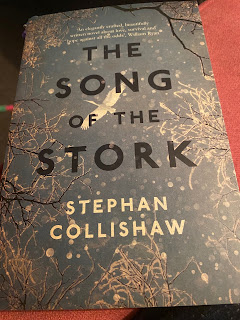
The Song of the Stork by Stephen Collishaw - Review

Friday, March 4, 2022


Okay, so, I don't generally read books about the Holocaust that are written by people who aren't Jewish, because I think they're taking away the voices of Jewish writers (who are a minority) and also I think a lot of them are really exploitative. Like ones where Jewish campmates fall in love with Nazi soldiers? You can miss me entirely with those. The Jewish people lived in fear of their lives so any relationship entered into wouldn't be consensual, to say the least. I'm actually quite disturbed by the new fashion for Holocaust literature because it just seems to use something as tragic as the Holocaust and exploit it. 

(I will also say that while I'm speaking about Jewish people above, it equally goes for LGBTQ+ people, Gypsy, Roma, and Traveller people, and anyone else who was put to death in the camps. As I write this, petitions are flying around to try to get Netflix to take down Jimmy Carr's latest comedy special, which included a frankly horrific "joke" about the deaths of GRT people in the death camps.)

So, with that caveat, I will say, I wouldn't have chosen this book for myself. But I got sent it, so I picked it up. And I have to say, I felt like it was very well researched and didn't feel exploitative. That goes in its favour. But it also needed a good proofread and copy edit, which did bring my star rating down.

Apparently it's set in Lithuania, which I didn't realise because everyone in it speaks Polish to each other - was Lithuania part of Poland at that point? I don't know. 

Anyway, Yael arrives at a small farm in the autumn of 1942, I think. She has been travelling with a woman called Rivka. Yael is only fifteen. They are Jewish, and on the run from where they lived, and have been hiding in the woods. Rivka dies, and as the winter draws in, Yael seeks shelter in the henhouse of the farm. It belongs to a man called Aleksei, who is mute, and who is a lot older than Yael. He realises she is there, and eventually invites her in to the farm house. She is able to bathe, and sleeps on the floor. Eventually she and Aleksei start a relationship (which I found really icky, taking another star off my score) but of course there is always the threat of the Nazis arriving and finding her, plus the threat of the Russians coming from the other side. Eventually Yael has to take off and join the partisans in the woods. 

I liked Yael a lot and I liked a lot of what happened to her. It was interesting to see a book set in the Holocaust which wasn't set in the death camps, but in an ordinary part of the countryside, but still with the threats of death. However, for the reasons stated above, I'm only giving it three out of five. 

The Cut Out Girl by Bart van Es - Review

Wednesday, June 10, 2020

This book is the May choice for my book club. We've met virtually a couple of times now and it's been really nice, and has been something to look forward to while in lockdown. I didn't read the last book -  I couldn't get into it - but I attended the meeting anyway because it was nice to talk to people. I bought this book secondhand on eBay and it arrived in plenty of time.

It's a strange genre of book, because it's a mixture of life writing, biography, memoir, and non fictional research. I actually liked it, I liked how it flipped between genre, but it means I'm not really sure where to start with this review!

It's about a woman called Lien de Jong. She was born in The Hague in 1933, to Jewish parents, and part of a large extended family. Her family was not particularly religious, but were registered as Jewish by the Dutch government who had ceded to the Nazis quite early on in the war. As the Nazis started to deport Dutch Jews from The Netherlands to death camps in the east, Lien's parents decided to give her up to go into hiding.

She was helped by a couple called Jan and Took Heroma and went to live with a family called van Es in 1942. They were 'Auntie' and 'Uncle', and their children Ali, Kees, and Marianne. Lien wasn't exactly happy there, but was safe and loved. As the Nazis moved throughout Holland, Lien's hiding place became less safe and she had to move. She was shunted from place to place until the end of the war. At that point, the Dutch government intervened as they tried to deal with many Jewish children who now did not have any family. Of Lien's family, there were only two adults remaining and neither were considered suitable to adopt her. Lien asked to go back to the van Esses, and stayed there throughout her teens and early twenties as she qualified as a social worker and later got married.

Bart, the author of the book, is the son of Lien's adoptive brother Henk, so basically her nephew. At the beginning of the book he has gone to Amsterdam to meet her and record her life story. He knows that there has been a schism between Lien and the family, but isn't sure why. She isn't mentioned by the family, only in passing, even though she went back to live with the family after the war and that the van Esses were the only family she knew after the deaths of her parents in Auschwitz.

So part of the book is life writing about Lien's life. It's taken from her descriptions of her life, but made somewhat fictional by descriptions added and some of Bart's other research. Lien's memories aren't always complete - which isn't surprising from any survivor of trauma, especially someone who has lived through the Holocaust. The reader does feel for Lien, though, throughout the book. Most of the book concentrates on her life during the war, which makes sense as that's definitely where the interest lies.

Other parts concentrate on Bart and his research in The Netherlands. Did you know that Dutch Jews had a death rate that was more than double any other country? This was partly due to the Dutch government's policies towards the Nazis, and also because they had done such an efficient job of registering Jews prior to the war. Bart travels throughout The Netherlands, seeing where Lien lived, where she escaped to, and meeting people she knew. He talks about his own family and Lien's place in it, his children and his life with them, and the lives and religious views of his ancestors. I liked this - I understood how the families combined and what it meant.

There are lots of photos in the book, mostly of Lien's family, the people she stayed with, and her history. It's actually really amazing that so many of her photos survived the war. There's also pages from her poesie book, which was a kind of autograph book. I really liked seeing the photos - it helped me anchor everyone into the story and, for Holocaust victims especially, it gives them a visibility they may not otherwise have.

There are also parts about what was happening in the war alongside what was happening to Lien, and about the post-war efforts to rebuild the country and reunite families. I found all this absolutely fascinating. I like learning about the lives of ordinary people throughout war times, and I know quite a lot about the Holocaust but didn't know much about what happened to Dutch Jews. I found it all extremely sad, of course, but also very interesting. I found I couldn't put the book down at all. I've never been to The Netherlands but really want to go, and I would definitely put some of the Jewish sights and memorials on to a to do list.

I have to give trigger warnings for, among others: genocide, holocaust, trauma, rape, abuse, suicide. This is a difficult book to read but I really wanted to know Lien's story.

I'm looking forward to finding out what everyone else at book club thought! I'm giving this five out of five.


The Stolen Ones by Vanessa Curtis - Review

Monday, October 21, 2019


I really didn't like this book. I gave it one star on Goodreads (my profile is here, if you're interested and/or want to be friends). I usually give up with books, but I'd got quite far through this one in about half an hour, and I kind of wanted to know where it went, so I just kept reading. I wasn't even sure whether to write a negative review, but given the subject matter, I think it's appropriate. 

This review will include spoilers, so click away if that's not something you want to read. Trigger warning for holocaust literature, too. I bought this book because the premise of a post-World War Two Germany setting appealed to me. I really like books that look at what happened after some kind of huge event, and I thought this fitted in quite well. 

The book is set in Munich in 1956. Inge is nearly sixteen years old and lives with her parents in a nice house. She has a boyfriend, Wilf, who she has to keep secret from her parents because he is Jewish. Her parents have a photo of Hitler in their study, and while Inge doesn't know too much about the war, she knows that her dad was a "good German soldier". 

On her birthday, a letter arrives addressed to someone called Kasia. Inge's parents quickly hide it in her mother's bureau, but then a strange woman turns up at the door and tries to speak to Inge. Inge decides she has to get into the bureau, so she gets Wilf to come to the house to pick the lock (which is his job, it's fine, it's not just a random thing). 

She finds letters and discovers that she is really adopted from Poland, and her birth name is Kasia. The woman who has been at the door is her mother. Inge was stolen from Poland by the Nazis, which is evidenced by a dream that she often has. She sees the woman in the street, but ignores her. She mopes around for a bit before telling her parents that she knows she's adopted. 

She - extremely randomly - discovers that her birth mother is working as a cleaner in the house of one of Inge's schoolmates, Marta. So she goes to the house and demands to see her, instead of, like, waiting for the woman outside? I won't say anymore about the story, but Jeez. 

This book is just really badly written. There's soooo much telling and not showing. Time skips weirdly. Inge gets an idea in her head and then just goes with it, like when she ends up visiting Dachau just by writing to them to ask? She has Marta's mother help her, but it's never shown as to why that is? Inge decides to rely on her "intuition" and does a ton of stupid things because of that. 

Plus, Inge and Wilf are supposed to have been together for about three years, and everyone at their school knows about them, but her parents have never caught on about their relationship? Is that likely? She has him in their house and he regularly drives her home, but her parents have never caught them? Then there's Wilf himself. He's just.... you know that trope of the Sexy Lamp? That's basically what Wilf is here. We never get to see his personality. The pain over losing his mother during the Holocaust isn't addressed, it just exists in order for him to be Jewish in the story and for him to be kept secret from Inge's parents? I'm not happy with the use of literal genocide in this way. 

I did read the whole book, and it wasn't redeemed in any way. I'm glad there was no redeeming of actual Nazis, but equally, I didn't think the subject was dealt with appropriately. I'm giving this one star. 
 

Blogger news

Blogroll

Most Read

Tags